Built-In Training
R2026bAfter defining the network architecture, you can define training parameters
using the trainingOptions function. You can
then train the network using the trainnet function. Use the trained network to predict class
labels or numeric responses.
Apps
| Time Series Modeler | Train models for time series prediction (Since R2026a) |
Functions
Topics
Training Fundamentals
- Create Simple Deep Learning Neural Network for Classification
This example shows how to create and train a simple convolutional neural network for deep learning classification. - Train Convolutional Neural Network for Regression
This example shows how to train a convolutional neural network to predict the angles of rotation of handwritten digits. - Create Custom Deep Learning Training Plot
This example shows how to create a custom training plot that updates at each iteration during training of deep learning neural networks usingtrainnet. (Since R2023b) - Custom Stopping Criteria for Deep Learning Training
This example shows how to stop training of deep learning neural networks based on custom stopping criteria usingtrainnet. (Since R2023b) - Speed Up Deep Neural Network Training
Learn how to accelerate deep neural network training. - Define Custom Learning Rate Schedule
This example shows how to define a time-based decay learning rate schedule and use it to train a neural network. - Train Network with Multiple Outputs
This example shows how to train a deep learning network with multiple outputs that predict both labels and angles of rotations of handwritten digits. - Train Network with Complex-Valued Data
This example shows how to predict the frequency of a complex-valued waveform using a 1-D convolutional neural network. - Denoise Complex-Valued Signal Using Multilayer Perceptron
Create and train a complex-valued neural network for denoising complex-valued signals. (Since R2026a) - Data Sets for Deep Learning
Discover data sets for various deep learning tasks. - Deep Learning Metrics
Comparison of metrics for deep learning tasks. - Transition trainNetwork, SeriesNetwork, and DAGNetwork Code to dlnetwork Workflows
Learn how to transitiontrainNetwork,SeriesNetwork, andDAGNetworkcode todlnetworkworkflows. - Transition Legacy Neural Network Code to dlnetwork Workflows
Learn how to transition legacy neural network code todlnetworkworkflows.
Tabular Data Workflows
- Training Neural Networks with Tabular Data
Learn about training neural networks with tabular data. - Train Neural Network with Tabular Data
This example shows how to train a neural network with tabular data. (Since R2023b) - In-Context Learning for Tabular Classification Using a Prior-Data Fitted Network
This example shows how to train a prior-data fitted network (PFN) to classify tabular data. (Since R2026a)
Sequence Data Workflows
- Training Neural Networks with Time Series Data
Learn about training neural networks with time series data. (Since R2026a) - Time Series Forecasting Using Deep Learning
This example shows how to forecast time series data using a long short-term memory (LSTM) network. - Compare Deep Learning and ARMAX Models for Time Series Modeling
This example shows how to train and compare different models for time series modeling using the Time Series Modeler app. (Since R2026a) - Sequence Classification Using Deep Learning
This example shows how to classify sequence data using a long short-term memory (LSTM) network. - Sequence-to-Sequence Classification Using Deep Learning
This example shows how to classify each time step of sequence data using a long short-term memory (LSTM) network. - Sequence-to-Sequence Regression Using Deep Learning
This example shows how to predict the remaining useful life (RUL) of engines by using deep learning. - Sequence-to-One Regression Using Deep Learning
This example shows how to predict the frequency of a waveform using a long short-term memory (LSTM) neural network. - Sequence Classification Using 1-D Convolutions
This example shows how to classify sequence data using a 1-D convolutional neural network. - Train Network with LSTM Projected Layer
Train a deep learning network with an LSTM projected layer for sequence-to-label classification. - Train Sequence Classification Network Using Data with Imbalanced Classes
This example shows how to classify sequences with a 1-D convolutional neural network using class weights to modify the training to account for imbalanced classes. - Sequence-to-Sequence Classification Using 1-D Convolutions
This example shows how to classify each time step of sequence data using a generic temporal convolutional network (TCN). - Sequence Classification Using CNN-LSTM Network
This example shows how to create a 2-D CNN-LSTM network for speech classification tasks by combining a 2-D convolutional neural network (CNN) with a long short-term memory (LSTM) layer. - Train Network Using Custom Datastore for Sequence Data
This example shows how to train a deep learning network on out-of-memory sequence data using a custom datastore. - Train Speech Command Recognition Model Using Deep Learning
This example shows how to train a deep learning model that detects the presence of speech commands in audio. - Chemical Process Fault Detection Using Deep Learning
Use simulation data to train a neural network than can detect faults in a chemical process. - Battery State of Charge Estimation Using Deep Learning
Define requirements, prepare data, train deep learning networks, verify robustness, integrate networks into Simulink, and deploy models. (Since R2024b) - Autoregressive Time Series Prediction Using Deep Learning
This example shows how to interactively train an autoregressive deep neural network using the Time Series Modeler app to predict electricity consumption. (Since R2026a) - Denoise ECG Signals Using Deep Learning
This example shows how to interactively train deep neural networks to remove noise from heartbeat electrocardiogram (ECG) signals using the Time Series Modeler app. (Since R2026a) - Build Transformer Network for Time Series Regression
This example shows how to interactively build and train a transformer network to predict engine torque using the Time Series Modeler app. (Since R2026a) - Create Virtual Sensors Interactively Using Deep Learning and Generate C Code for Deployment
This example shows how to interactively train a deep neural network as a virtual sensor to predict battery state of charge using the Time Series Modeler app. (Since R2026a)
Image Data Workflows
- Train Network on Image and Feature Data
This example shows how to train a network that classifies handwritten digits using both image and feature input data. - Multilabel Image Classification Using Deep Learning
This example shows how to use transfer learning to train a deep learning model for multilabel image classification. - Build Image-to-Image Regression Network Using Deep Network Designer
This example shows how to use Deep Network Designer to construct an image-to-image regression network for super resolution.
Featured Examples
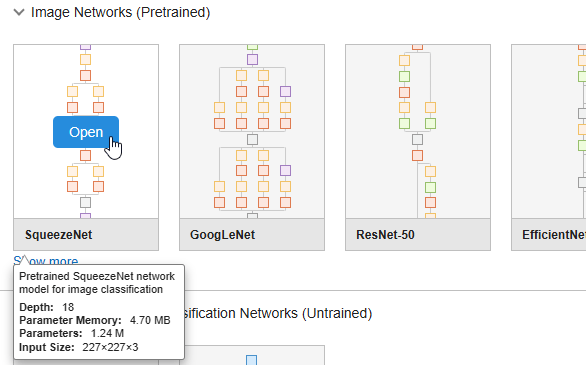
Prepare Network for Transfer Learning Using Deep Network Designer
Interactively fine-tune a pretrained deep learning network to learn a new image classification task.
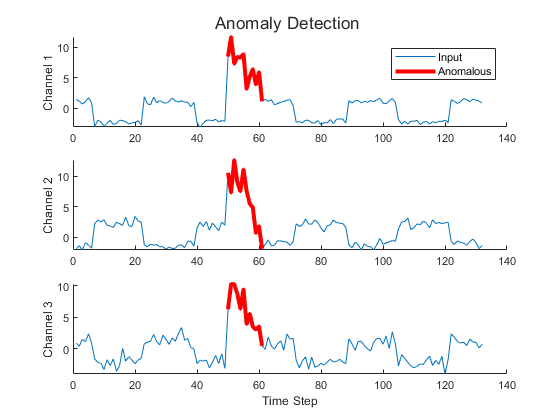
Time Series Anomaly Detection Using Deep Learning
Detect anomalies in sequence or time series data.
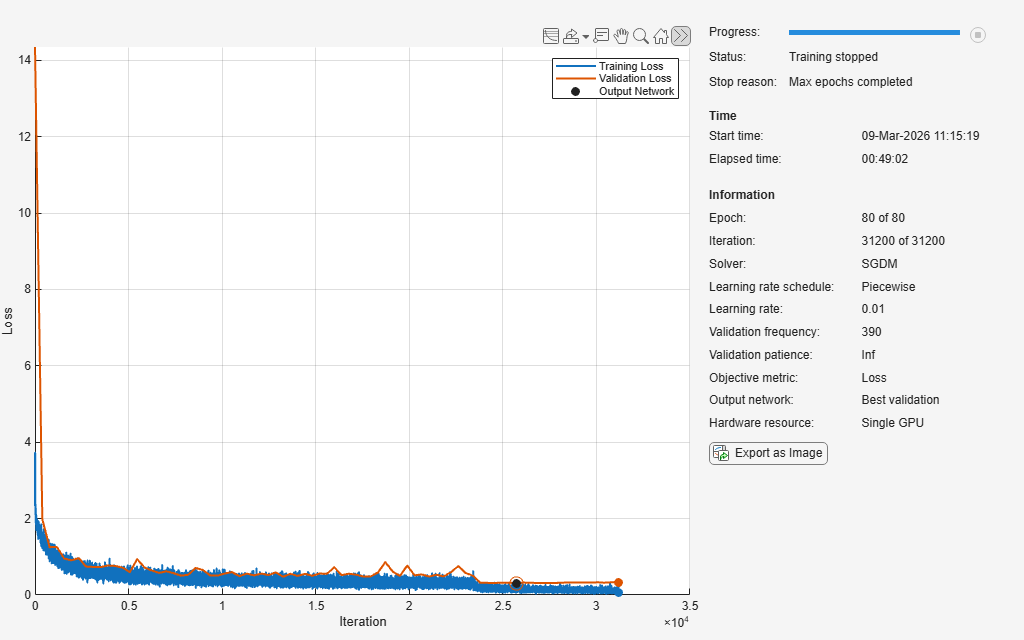
Train Residual Network for Image Classification
Create a deep learning neural network with residual connections and train it on CIFAR-10 data. Residual connections are a popular element in convolutional neural network architectures. Using residual connections improves gradient flow through the network and enables training of deeper networks.
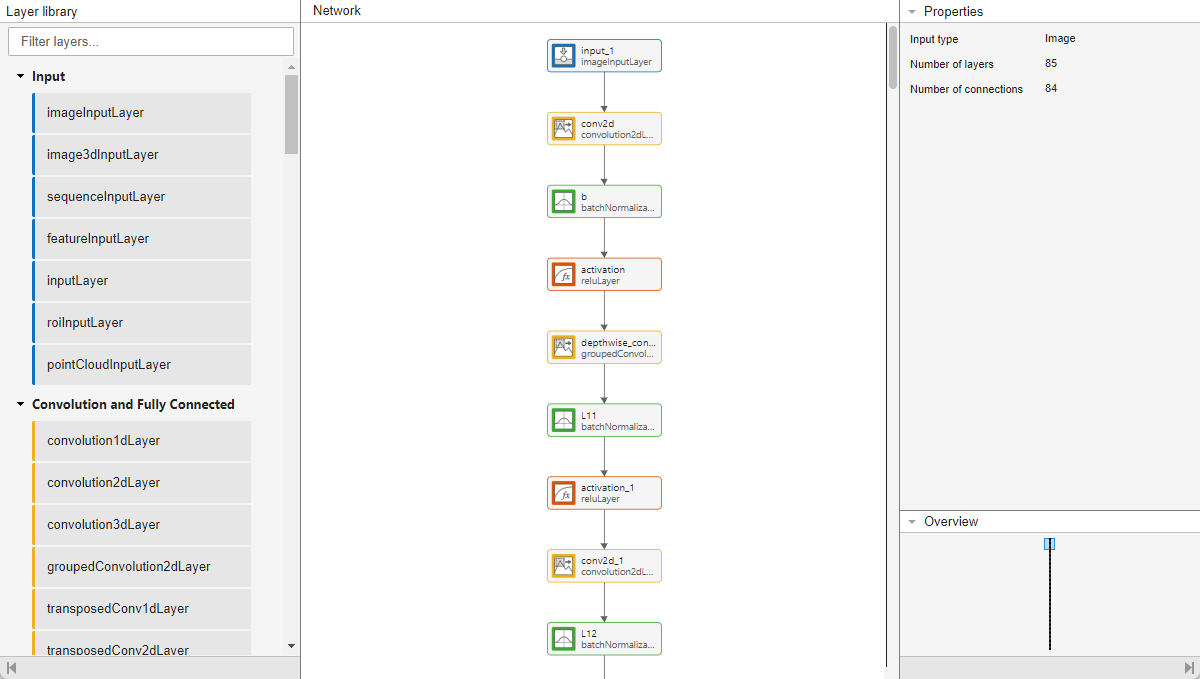
Adapt Pretrained Audio Network for New Data Using Deep Network Designer
Interactively adapt a pretrained network to classify new audio signals using Deep Network Designer.

Classify Videos Using Deep Learning
Create a network for video classification by combining a pretrained image classification model and an LSTM network.

Train Neural ODE Network
Train an augmented neural ordinary differential equation (ODE) network.
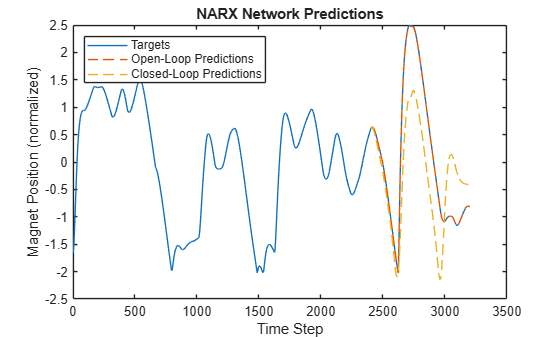
Create and Train NARX Network for Time Series Forecasting
Create and train a NARX network for time series forecasting and test its predictions in MATLAB® and Simulink®.
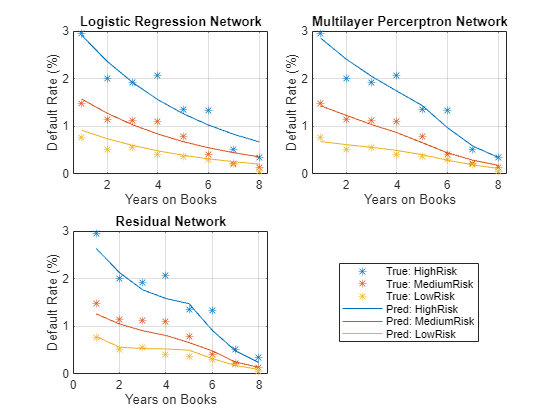
Compare Deep Learning Networks for Credit Default Prediction
Create, train, and compare three deep learning networks for predicting credit default probability.
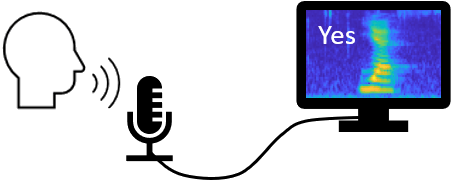
Train Speech Command Recognition Model Using Deep Learning
Train a deep learning model that detects the presence of speech commands in audio. The example uses the Speech Commands Dataset [1] to train a convolutional neural network to recognize a set of commands.
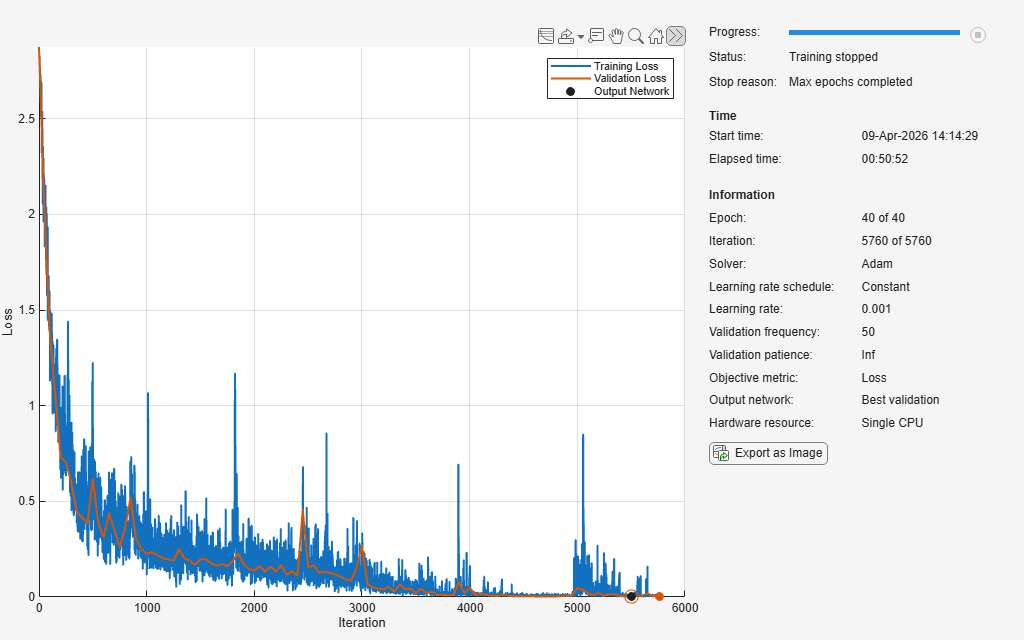
Chemical Process Fault Detection Using Deep Learning
Use simulation data to train a neural network than can detect faults in a chemical process.
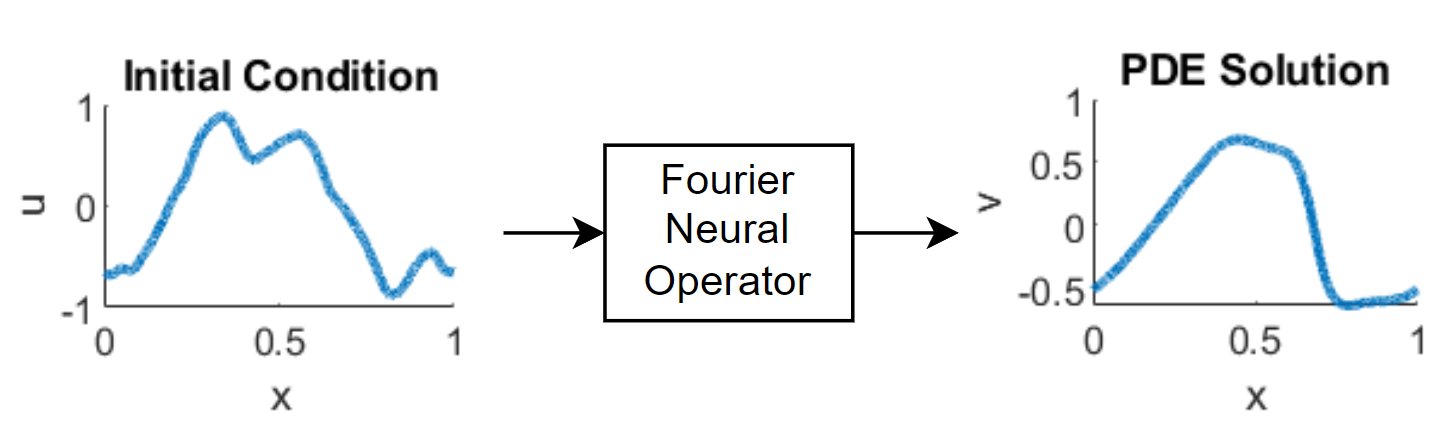
Solve PDE Using Fourier Neural Operator
Train a Fourier neural operator (FNO) neural network that outputs the solution of a partial differential equation (PDE).

