creating a custom color map

Ältere Kommentare anzeigen
I'm looking to create a custom color map so that an image appears as various shades of red. I understand that this would require changing the matrix of the RGB image to an image consisting of _,0,0, but I am not sure of the best way to go about this
2 Kommentare

Markus Kokot
am 29 Dez. 2020
is a there a solution?
Image Analyst
am 29 Dez. 2020
Yes, two of them. Did youi scroll down and look at them?
Antworten (2)
Image Analyst
am 25 Feb. 2015
You don't need an RGB image. In fact RGB images don't even take a colormap. If you want an RGB image, just create one
rgbImage = cat(3, grayImage, zeros(size(grayImage), 'uint8'), zeros(size(grayImage), 'uint8'));
imshow(rgbImage);
Or use a colormap with your grayscale image:
grayImage = imread('moon.tif');
imshow(grayImage);
colorMap = [linspace(0,1,256)', zeros(256,2)]
colormap(colorMap);
colorbar;

3 Kommentare

Gabriel Cotlier
am 5 Mai 2020
I would like to have the same color map as NASA for plotting nighttime images, going from dark blue which I think is 0 and degres of yellow to strong yellow that are the values, What is combination of numbers I shoud use in the colormap? ( colorMap = [linspace(0,1,256)', zeros(256,2)]
Image Analyst
am 5 Mai 2020
Try this:
yellowMap = [linspace(0, 255, 256)', linspace(0, 255, 256)', zeros(256, 1)]
colormap(yellowMap);
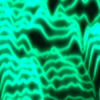
I'm not so sure that's a simple false color image. It may be a composite. That possibility aside, here's a better approximation:
% reduced sampling
x0 = [0 0.008889 0.03556 0.08 0.1422 0.2222 0.32 0.4356 0.5644 0.68 0.7778 0.8578 0.92 0.9644 0.9911 1];
CT0 = [0 0 0.1; 0.002914 0.01103 0.1143; 0.01221 0.02996 0.1352; 0.02938 0.04745 0.1489; 0.05622 0.07057 0.1604; ...
0.09753 0.1003 0.1803; 0.1756 0.1568 0.2046; 0.2908 0.2456 0.2395; 0.4299 0.355 0.2906; 0.5757 0.4753 0.3516; ...
0.7288 0.6116 0.427; 0.8555 0.7448 0.5124; 0.9486 0.8541 0.6076; 0.9871 0.9329 0.7081; 0.9983 0.983 0.809; 1 1 0.95];
% generate a new uniform table of desired length
N = 256;
xf = linspace(0,1,N);
CT = interp1(x0,CT0,xf,'pchip');
% use the map to plot something
x = linspace(-pi/2,pi/2,30);
y = x.';
z = sin(x).*sin(y);
surf(x,y,z)
colormap(CT)
colorbar
view(-17,50)

Of course, the dark blue is essentially black against this awful white background, but that's what you get.
Note that even though we might be able to define some trajectory through some color space, there's no information which unambiguously informs us about the rate at which that path is traversed with respect to the mapped variable. Here, we're assuming it's linear.
% generate some example images using shifted versions of the CT
testsweeps = cat(3,ctshift(CT,-0.67), ...
ctshift(CT,-0.33), ...
ctshift(CT,0), ...
ctshift(CT,0.33), ...
ctshift(CT,0.67));
testsweeps = permute(testsweeps,[3 1 2]);
testsweeps = imresize(testsweeps,[128 256],'nearest');
imshow(testsweeps)


Alka Nair
am 25 Feb. 2015
Bearbeitet: per isakson
am 25 Feb. 2015
1 Stimme
The 'colormapeditor' helps in displaying the current figure's colormap and customizing it. To find more information about colormapeditor, please refer to the documentation at:
Kategorien
Mehr zu Blue finden Sie in Hilfe-Center und File Exchange
am 16 Jan. 2023
Community Treasure Hunt
Find the treasures in MATLAB Central and discover how the community can help you!
Start Hunting!
Translated by 

