Ältere Kommentare anzeigen
Hi,
I am having some trouble plotting a sine wave and i'm not sure where i am going wrong.
i have
t = [0:0.1:2*pi]
a = sin(t);
plot(t,a)
this works by itself, but i want to be able to change the frequency. When i run the same code but make the change
a = sin(2*pi*60*t)
the code returns something bad. What am i doing wrong? How can i generate a sin wave with different frequencies?
6 Kommentare

Ahmed Grera
am 3 Sep. 2017
How many cycles do you need in drawing?

Govinda Nahak
am 2 Okt. 2017
in sine function in MATLAB it is always sin(wt). here frequency w is in radian/sec not f (in HZ) so w will give you the no.of the cycle.
suppose w=1 it is one cycle and so on
if you want to use the sin(2*pi*60*t) you can use the sind(2*pi*9.545*t). why i use the 9.545 bcz we should convert the f to w in the time interval of 2*pi.

Jorge Ignacio Cisneros Saldana
am 22 Nov. 2019
How can we make it 3 phase system? for 50 Hz and 230 V peak to peak

Arif Raihan
am 10 Aug. 2021
Sample a continuous time cosine signal of amplitude 3 V. Sir please solve this.

Walter Roberson
am 10 Aug. 2021
In order to solve that, you need some hardware to do analog to digital conversion between your 3V source and MATLAB.
3V is too large for audio work, so you are not going to be able to use microphone inputs to do this. You are going to need hardware such as a National Instruments ADC or at least an arduino (you might need to put in a resistor to lower the voltage range.)
The software programming needed on the MATLAB end depends a lot on which analog to digital convertor you use.
The appropriate analog to digital convertor to use is going to depend in part on what sampling frequency you need to use; you did not define that, so we cannot make any hardware recommendations yet.

Gokul Krishna N
am 13 Okt. 2021
Just been reading the comments in this question. Hats off to you, sir @Walter Roberson
Akzeptierte Antwort

Rick Rosson
am 24 Apr. 2012
Please try:
%%Time specifications:
Fs = 8000; % samples per second
dt = 1/Fs; % seconds per sample
StopTime = 0.25; % seconds
t = (0:dt:StopTime-dt)'; % seconds
%%Sine wave:
Fc = 60; % hertz
x = cos(2*pi*Fc*t);
% Plot the signal versus time:
figure;
plot(t,x);
xlabel('time (in seconds)');
title('Signal versus Time');
zoom xon;
HTH.
Rick
3 Kommentare

Rajasekaran
am 14 Mär. 2013
Thanks for your reply & detailed answer.

Nauman Hafeez
am 28 Dez. 2018
How to calculate Fs for a particular frequency signal?
I am generating a stimulating signal using matlab for my impedance meter and it gives me different results on different Fs.

alex
am 23 Sep. 2025
class you are mate, bang on
Weitere Antworten (8)

Mike Mki
am 29 Nov. 2016
7 Stimmen
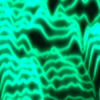
Dear Mr. Rick, Is it possible to create knit structure in Matlab as follows:


clear;
clc;
close;
f=60; %frequency [Hz]
t=(0:1/(f*100):1);
a=1; %amplitude [V]
phi=0; %phase
y=a*sin(2*pi*f*t+phi);
plot(t,y)
xlabel('time(s)')
ylabel('amplitude(V)')

2 Kommentare

DARSHAN
am 8 Jan. 2023
why should we multiply f with 100?
Walter Roberson
am 8 Jan. 2023
I think the intent was to give 100 samples per cycle.

Robert
am 28 Nov. 2017
aaa,
What goes wrong: by multiplying time vector t by 2*pi*60 your discrete step size becomes 0.1*2*pi*60=37.6991. But you need at least two samples per cycle (2*pi) to depict your sine wave. Otherwise you'll get an alias frequency, and in you special case the alias frequency is infinity as you produce a whole multiple of 2*pi as step size, thus your plot never gets its arse off (roundabout) zero.
Using Rick's code you'll be granted enough samples per period.
Best regs
Robert

shampa das
am 26 Dez. 2020
Bearbeitet: Walter Roberson
am 31 Jan. 2021
clc; t=0:0.01:1; f=1; x=sin(2*pi*f*t); figure(1); plot(t,x);

fs1=2*f; n=-1:0.1:1; y1=sin(2*pi*n*f/fs1); figure(2); stem(n,y1);

fs2=1.2*f; n=-1:0.1:1; y2=sin(2*pi*n*f/fs2); figure(3); stem(n,y2);

fs3=3*f; n=-1:0.1:1; y3=sin(2*pi*n*f/fs3); figure(4); stem(n,y3); figure (5);

subplot(2,2,1); plot(t,x); subplot(2,2,2); plot(n,y1); subplot(2,2,3); plot(n,y2); subplot(2,2,4); plot(n,y3);


soumyendu banerjee
am 1 Nov. 2019
%% if Fs= the frequency u want,
x = -pi:0.01:pi;
y=sin(Fs.*x);
plot(y)
1 Kommentar
Walter Roberson
am 20 Sep. 2024
This should have
plot(x, y)

sevde busra bayrak
am 24 Aug. 2020
sampling_rate = 250;
time = 0:1/sampling_rate:2;
freq = 2;
%general formula : Amplitude*sin(2*pi*freq*time)
figure(1),clf
signal = sin(2*pi*time*freq);
plot(time,signal)
xlabel('time')
title('Sine Wave')

clc
clear all
fs = 10000;
T=1/fs
f1 = 100;
f2= 50;
L= 10000;
t = (0:L-1)*T;
x1 =sin(2*pi*f1*t)+4*cos(2*pi*f2*t)
figure
subplot(2,2,1)
plot(t,x1)
axis([0 0.1 -1 6]);
title('SS Function');
xlabel('time');
ylabel('magnitude');
%frequency domain conversion and plotting
Y_x1=fftshift(fft(x1));
subplot(2,1,2)
plot (-(fs/2-fs/L)-1:(fs/L):(fs/2-fs/L),abs(Y_x1))
axis([-700 700 0 max(abs(Y_x1))+10000]);
title('Magnitude spectrum of S1 Function');
xlabel('Frequency(Hz)');
ylabel('magnitude');
sgtitle('Frequency Domain Representation of S1 Function');


If you're using release R2018b or later, rather than computing sin(pi*something), I recommend using the sinpi function (and there is a corresponding cospi function.)
x = 0:0.25:2
s1 = sin(x*pi)
s2 = sinpi(x)
Note that elements 5 and 9 of s1 and s2 are visually different. In s1 they are very close to, but not exactly equal to, 0. In s2 since we're taking the sine of exact multiples of pi (x(5) is exactly 1 and x(9) is exactly 2) we get actual 0 values.
format longg
[s1([5 9]); s2([5 9])]
And in this particular example from the original question:
t = [0:0.1:2*pi];
inner = 2*60*t
When we compare their values with the rounded version of those values using a very tight tolerance, we see that the values of inner are all very, very close to integer values. [isapprox was introduced in release R2024b.]
all(isapprox(inner, round(inner), 'verytight'))
That means that if we use sinpi all the values should be very close to 0.
a = sinpi(inner)
maximumDifferenceFromZero = max(a, [], ComparisonMethod="abs")
I'd say that's effectively 0 for most purposes.
Kategorien
Mehr zu 2-D and 3-D Plots finden Sie in Hilfe-Center und File Exchange
Community Treasure Hunt
Find the treasures in MATLAB Central and discover how the community can help you!
Start Hunting!
Translated by 

